Poker has been a popular pastime for centuries, but the evolution of technology has pushed this classic card game into the digital age. The shift from physical poker rooms to online platforms has created a new wave of interest in mobile poker apps, allowing players to enjoy the game from anywhere at any time. With rapid advancements in mobile game development, poker app games are set to become more immersive, interactive, and accessible than ever before. As we approach 2026, the world of poker game development is poised for another leap forward, driven by a combination of cutting-edge technologies and evolving user expectations.
Poker Gaming Market Overview 2026
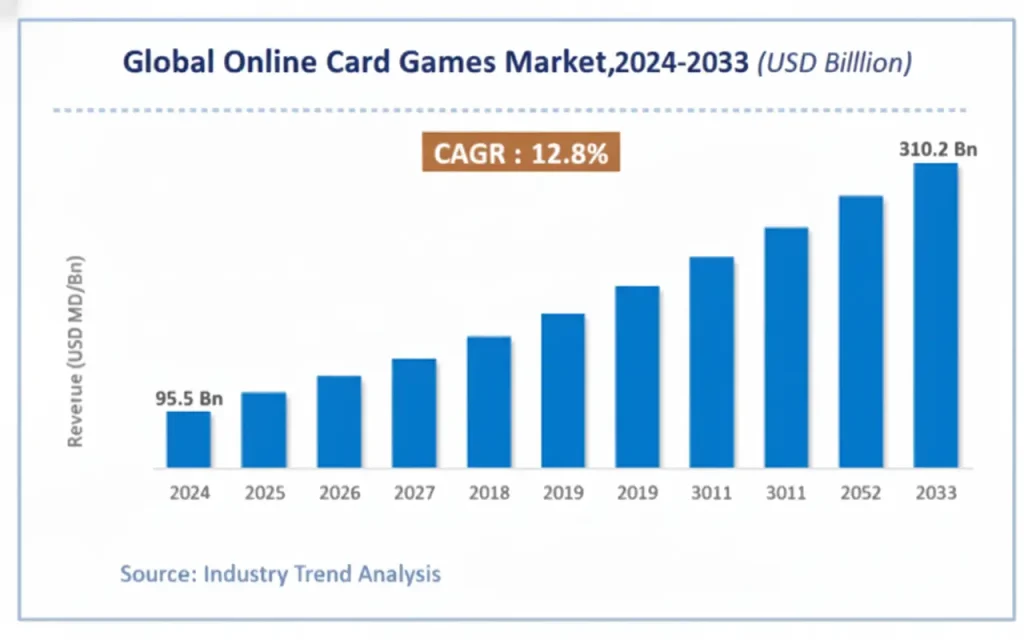
The global online poker market has expanded significantly over the last few years, with millions of active players worldwide. According to various industry reports, the online gaming market is expected to continue its upward trajectory, reaching new heights in 2026. The increasing use of smartphones and other mobile devices has driven the growth of online card games, and poker is no exception. In addition to mobile apps, the rise of live-streamed poker events and online poker tournaments has generated substantial attention. Social media platforms, streaming services, and influencers have further bolstered the visibility of poker games, making them an essential part of the digital entertainment ecosystem.
Top Poker Game Development Trends in 2026
Let’s dive into some of the most influential trends shaping poker game app development in 2026:
AI-Powered Gameplay & Personalisation
Artificial Intelligence is revolutionising the online gaming industry by creating more dynamic and personalised gameplay experiences. In poker apps, AI-powered features can be used to tailor the game based on a player’s skill level and preferences. For instance, poker apps can employ machine learning algorithms to assess a player’s performance and offer personalised suggestions to help them improve.
AI can also be used to detect patterns in player behavior, allowing developers to create adaptive AI opponents that offer a challenging experience. Additionally, AI can enhance the game’s narrative by creating more lifelike, intelligent NPCs (non-playable characters).
Blockchain & Web3 Integration
Blockchain technology and Web3 are transforming the landscape of online poker. By leveraging the transparency and security offered by blockchain, poker game developers can ensure that every card dealt and every bet placed is verifiable and tamper-proof.
Web3, which focuses on decentralised internet infrastructure, opens up new possibilities for poker apps by introducing decentralised finance (DeFi) and cryptocurrency integrations.
Players can use digital currencies for betting and winnings, while also participating in decentralized tournaments and poker rooms that are not controlled by centralized authorities.
Cross-Platform & Cloud Gaming
With the rise of mobile gaming, players expect to be able to access their favorite poker games across different devices and platforms seamlessly. Cross-platform compatibility allows players to start a game on their phone and continue it on a tablet or PC without losing progress.
AR & VR Poker Experiences
The integration of Augmented Reality (AR) and Virtual Reality (VR) technologies will redefine how players experience poker games. While AR adds virtual elements to the real-world environment, VR immerses players in a completely virtual setting. Both offer exciting new ways to play poker beyond the traditional 2D screens.
Enhanced Security & Fair Play
As the online gaming industry continues to expand, ensuring the security and fairness of poker games is paramount. Developers will need to adopt advanced security measures such as multi-factor authentication, encryption, and fraud detection algorithms to protect players’ data and financial transactions.
Social Gaming & Community Features
Poker has always been a social game, and in 2026, the trend toward social gaming will continue to grow. Poker game apps will integrate more social features, allowing players to interact with friends, join clubs, and participate in team-based challenges.
Monetization Innovations
As competition in the mobile gaming industry intensifies, developers will need to adopt innovative monetization strategies to sustain their poker apps. In-app purchases (IAPs) will continue to be a significant revenue stream, with players buying chips, skins, or exclusive content.
Don’t Build for Today. Build for 2026.
The future of poker is in AI opponents, Blockchain security, and VR immersion. Partner with our specialists to develop a scalable, compliance-ready poker platform that dominates the market in the years to come.
Challenges and Solutions in Poker Game App Development
While the prospects for poker game apps are promising, developers face several challenges in building successful platforms:
While the poker game app industry is booming, developers face several challenges in building successful, sustainable, and competitive platforms. These challenges range from technological hurdles to regulatory concerns. Let’s explore some of the key issues that game app developers must overcome in 2026 and beyond.
1. Regulatory Compliance
- Challenge: The legal landscape surrounding online poker is complex and varies widely by region. Some countries have strict regulations or outright bans on online gambling, while others may have looser restrictions. In the U.S., for example, online poker is regulated at the state level, meaning developers must tailor their apps to comply with state-specific laws.
- Solution: Developers must stay informed about the regulatory environment in all the regions where they plan to operate. This may require working with legal advisors to ensure their poker app adheres to local laws and requirements. Additionally, they should implement geo-restrictions and age verification systems to prevent unauthorized users from accessing the platform.
2. Security and Data Protection
- Challenge: Online poker apps handle sensitive user data, including personal information and financial transactions. Cybersecurity threats, such as hacking, identity theft, and fraud, are major concerns. Ensuring that player data is protected and that financial transactions are secure is crucial for maintaining user trust.
- Solution: Implement robust security measures such as end-to-end encryption, two-factor authentication, and regular security audits. Poker apps should also comply with global data protection regulations, such as GDPR in Europe, to safeguard player information.
3. Fairness and Transparency
- Challenge: One of the most important factors for the success of any poker game app is ensuring fairness. Players need to trust that the games they are participating in are not rigged and that outcomes are random. Any perception of unfairness, whether due to poor game design or manipulation, can quickly lead to a loss of users.
- Solution: Developers can address this by integrating blockchain technology for transparency and using random number generators (RNGs) that are independently audited. Additionally, providing players with a verifiable audit trail of each hand dealt will further ensure the integrity of the game.
4. Player Retention
- Challenge: The poker game app market is highly competitive, with a large number of apps available for players to choose from. Keeping players engaged and coming back to the app is a challenge that many developers face.
- Solution: To retain players, developers must focus on creating a compelling user experience with personalized gameplay, attractive rewards, and social features. Gamification elements such as tournaments, achievements, and leaderboards can also enhance engagement. Regular updates with new content and features will keep the game fresh and exciting.
5. Creating Realistic AI Opponents
- Challenge: As poker game apps evolve, players expect increasingly sophisticated AI opponents that mimic human behavior. Designing an AI that can challenge experienced players while still being fair and accessible to beginners is a difficult task.
- Solution: Developers can use machine learning and adaptive AI to tailor the difficulty of opponents based on the player’s skill level. This ensures that both novice and advanced players have a satisfying experience. Additionally, incorporating strategic behavior patterns and bluffing techniques will make AI opponents more lifelike.
6. Balancing Multiplayer Features
- Challenge: Poker is inherently a social game, and the online experience should reflect that. However, balancing multiplayer features—such as live tables, chat functions, and tournaments—can be complex. Ensuring smooth gameplay with minimal lag, even with multiple players, is crucial.
- Solution: Implementing cloud-based solutions and optimizing server infrastructure will help ensure a seamless multiplayer experience. Additionally, features like private rooms, friends lists, and in-game chat allow players to engage with each other and create a sense of community within the app.
7. Integration of Emerging Technologies
- Challenge: As mentioned in the trends section, the integration of technologies like AR/VR, blockchain, and AI into poker games presents unique challenges. These technologies require substantial investment in both research and development, as well as the infrastructure needed to support them.
- Solution: Developers should begin with a clear vision for how these technologies will enhance the user experience and progressively integrate them into the app. It’s important to test new features in beta versions to gather user feedback and adjust the product before a full release.
8. Maintaining Game Balance for Different User Levels
- Challenge: Poker apps often attract players with varying levels of experience, from beginners to seasoned professionals. Ensuring a balanced experience that caters to both groups can be difficult.
- Solution: Developers can implement features like matchmaking algorithms that pair players of similar skill levels. Additionally, tutorials and training modes can help new players get up to speed while ensuring that more experienced players don’t get frustrated with easy competition.
How to Build a Successful Poker Game App in 2026
 As the online poker industry continues to grow, creating a successful poker game app in 2026 demands a strategic approach that combines the latest technology with exceptional user experiences. With advancements in AI, blockchain, VR/AR, and mobile technologies, poker game apps need to evolve to stay competitive. To build an app that stands out, developers must focus on understanding their target audience, incorporating cutting-edge technologies, providing seamless gameplay, and ensuring the app’s security.
Here’s a streamlined approach to building a top-tier poker game app in 2026:
1. Target Audience & Regional Adaptation
Understanding your target audience is the first step to creating a successful poker app. Whether you’re catering to casual players, poker enthusiasts, or social gamers, tailoring the app to their preferences is crucial. Additionally, regional adaptation is important to meet varying legal regulations, languages, currencies, and payment methods. Localizing the app to appeal to different regions will make it accessible and attractive to a global player base.
2. Incorporate Advanced Technologies
Incorporating cutting-edge technologies is essential to remain competitive. AI-powered features can personalize the gameplay experience, creating adaptive opponents and dynamic challenges. Blockchain enhances the app’s transparency and security, offering tamper-proof transactions and a decentralized system. Cross-platform compatibility ensures that players can enjoy the game across various devices, from smartphones to VR headsets, while AR/VR can provide a fully immersive poker experience.
3. User-Friendly Design
A user-friendly design is essential for ensuring players can navigate the app easily and enjoy their experience. Focus on creating an intuitive interface with easy-to-understand mechanics and clear instructions for new players. Stunning graphics and smooth animations can significantly improve the user experience, while fast load times and lag-free gameplay are critical for maintaining player retention and satisfaction.
4. Social Features & Engagement
Poker is inherently a social game, and integrating social features into your app can boost engagement. Adding in-app chat functionality, private tables, and multiplayer modes allows players to interact and enjoy a competitive environment. Tournaments, leaderboards, and social sharing features enable players to connect with friends, showcase achievements, and stay engaged with the app long-term. Creating communities, like poker clubs, can also build a loyal user base.
5. Secure Payment & Monetization
A seamless and secure payment system is vital for any poker app. Offer a variety of payment methods, including traditional credit cards, e-wallets, and cryptocurrencies, to cater to a wide range of users. Quick and hassle-free deposits and withdrawals ensure a smooth user experience. In terms of monetization, consider offering in-app purchases for virtual goods, chips, and customization options, along with VIP subscriptions and non-intrusive ads that enhance the gameplay experience without frustrating players.
6. Continuous Optimization & Marketing
Once your app is live, continuous testing, updates, and optimization are necessary to maintain a high-quality user experience. Regularly gather feedback from users to identify areas for improvement and address any technical issues promptly. Marketing your app is also crucial for success. Launch campaigns, influencer partnerships, and referral programs will help you attract and retain players, expanding your app’s reach in a competitive market.
The Future of Poker Game App Development Beyond 2026
Beyond 2026, we can expect to see even more revolutionary advancements in poker game app development. The continued growth of AI, AR/VR, and blockchain technologies will likely shape the future of poker. Additionally, the integration of 5G networks will enable more immersive and faster gaming experiences, further pushing the boundaries of what’s possible in mobile poker.
The poker game app industry is booming, and 2026 will mark a year of tremendous innovation. By staying ahead of the technological curve and focusing on the evolving needs of players, developers can build successful poker apps that not only meet current demands but also prepare for the future of gaming. Whether it’s through AI-powered gameplay, blockchain transparency, or immersive AR/VR experiences, the future of poker game app development is bright, dynamic, and full of exciting possibilities.