The iGaming industry has seen remarkable growth, with global revenues projected to surpass $100 billion by 2026, up from $61.5 billion in 2020. This rapid expansion highlights the growing demand for online gaming experiences, from iGaming app development to iGaming platform development. The shift toward mobile gaming is particularly significant, with over 50% of global online gaming revenue now coming from mobile devices.
As businesses and developers rush to meet this demand, online casino development has become more competitive than ever. The need for cutting-edge iGaming software development and innovative online casino game development solutions is crucial to stay ahead in the market. However, with rapid growth comes unique challenges: platform security, adherence to global regulations, and maintaining user engagement are just a few of the hurdles developers face.
In this article, we’ll explore the history of iGaming, examine the challenges businesses face, break down the costs associated with development, and share valuable tips for success in the dynamic iGaming market.
What is iGaming?
iGaming, short for Interactive Gaming, refers to all forms of online gambling, including online casinos, sports betting, live dealer games, and digital lottery systems. It allows players to engage in interactive experiences such as wagering (place bets) on games, sports, or virtual events through internet-connected platforms, offering unmatched convenience and accessibility.

Examples of iGaming Activities:
Popular iGaming platforms include PokerStars, which offers a wide range of poker games, and Bet365, a leading sports betting site. Both platforms are part of the rapidly growing iGaming market, attracting millions of users worldwide.
How iGaming Works:
iGaming is facilitated through internet-based gameplay, where players access platforms via websites or apps. Geolocation technology plays a key role by ensuring that players are in legal jurisdictions, maintaining the fairness and security of online casino games and other iGaming activities.
Why iGaming is Popular:
The convenience of online play has made iGaming a favorite among players, as they can enjoy their favorite games from anywhere. The rise of mobile gaming has also contributed to this growth, with players now able to access their favorite iGaming software development platforms directly on their smartphones. Additionally, live games and real-time betting bring an authentic experience, making players feel like they’re at a physical casino or sports arena.
iGaming History: A Quick Overview
The iGaming industry, now a dominant force in mobile gaming, has evolved through various key breakthroughs. Here’s a brief timeline of its rise:
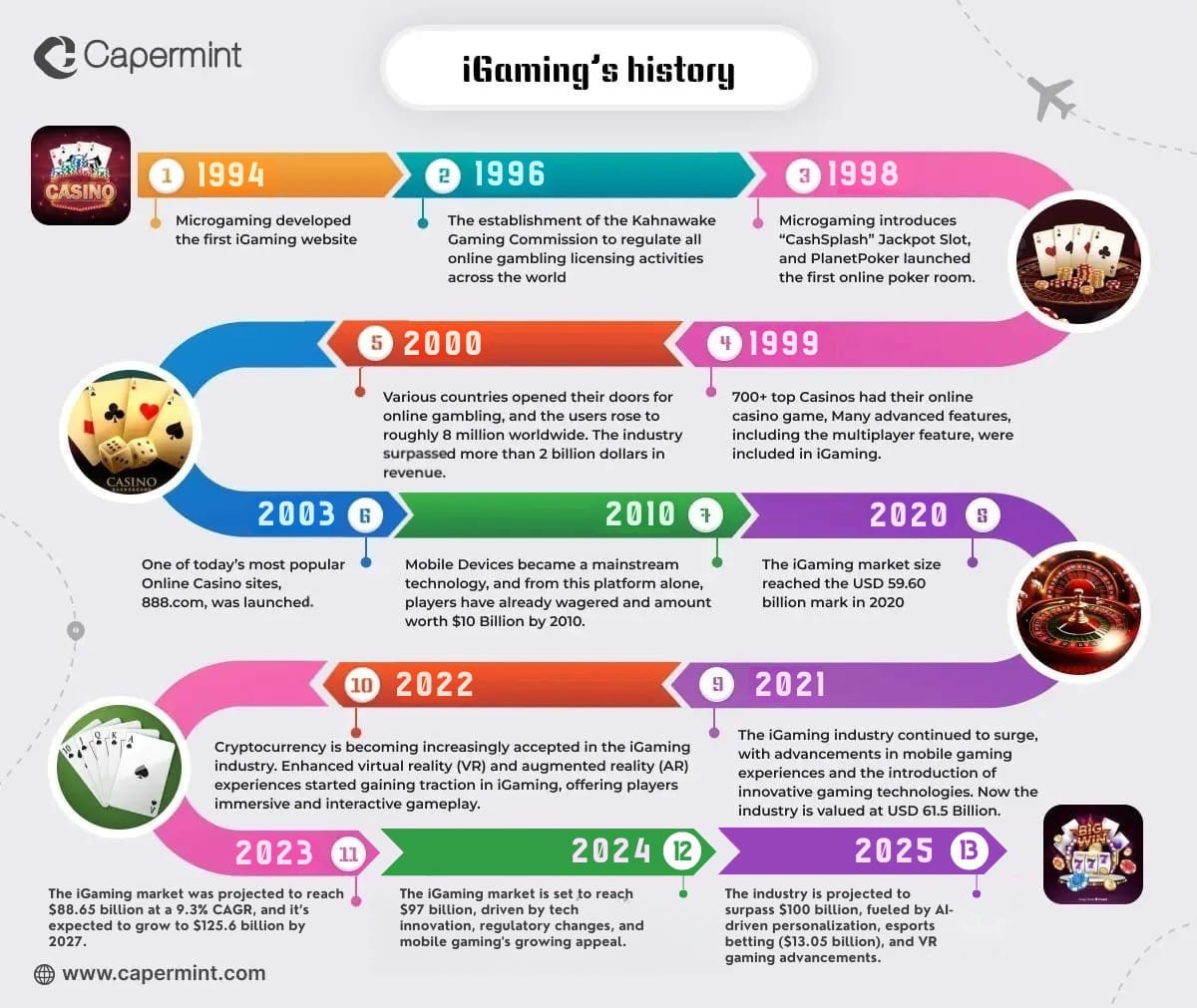
1994: Microgaming launched the first-ever online iGaming website, marking the start of the digital gambling era.
1996: The Kahnawake Gaming Commission was established to regulate online gambling licensing worldwide.
1998: Microgaming introduced the “CashSplash” Jackpot Slot and PlanetPoker launched the first online poker room.
1999: Over 700 online casinos appeared, introducing multiplayer features to enhance user interaction.
2000: With the opening of online gambling in many countries, the number of players hit 8 million, and industry revenue surpassed $2 billion.
2003: 888.com, one of the leading online gambling platforms, was launched and quickly gained popularity.
2010: By 2010, mobile gaming had taken off, with $10 billion wagered through mobile devices.
2020: The iGaming market reached a size of USD 59.6 billion, fueled by mobile gaming and new technologies.
2021: The market grew to USD 61.5 billion, with advancements in VR, AR, and immersive gaming technologies.
2022: Cryptocurrency began to gain traction in iGaming, and VR/AR continued to shape the player experience.
2023: The iGaming market was projected to reach $88.65 billion at a 9.3% CAGR, and it’s expected to grow to $125.6 billion by 2027.
2024: The iGaming market is set to reach $97 billion, driven by tech innovation, regulatory changes, and mobile gaming’s growing appeal.
2025: The industry is projected to surpass $100 billion, fueled by AI-driven personalization, esports betting ($13.05 billion), and VR gaming advancements.
Key Benefits of iGaming
For Players
- Accessibility: iGaming allows players to play from anywhere, whether they’re at home or on the go, thanks to mobile gaming. This flexibility makes it more appealing to a wider audience.
- Variety of Games and Betting Options: The iGaming platform development offers a wide selection of online casino games, sports betting, and live dealer options, ensuring that players always have something new to explore.
- Exclusive Online Bonuses and Promotions: Online casinos and sports betting platforms often provide exclusive bonuses and promotions to attract and retain players, giving them more chances to win.
For Businesses
- Expanding Customer Base: With the iGaming market being accessible worldwide, businesses can reach a larger, global audience and tap into markets they might have otherwise missed.
- Real-time Data Collection: The ability to gather real-time data through iGaming app development allows businesses to better understand player behavior and target marketing efforts more effectively, optimizing their user experience.
Challenges in iGaming
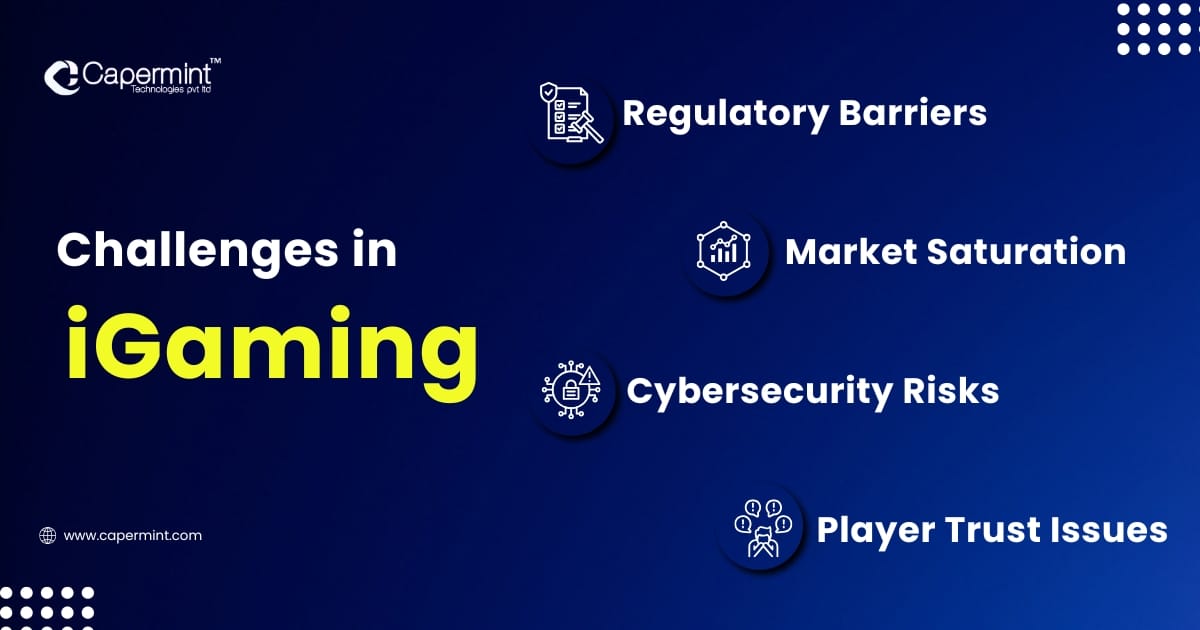
Regulatory Barriers
- Differences in Laws by Country/Region: One of the biggest challenges in iGaming software development is navigating varying laws and regulations across different regions and countries.
- Securing Licenses in Multiple Jurisdictions: Obtaining licenses in multiple jurisdictions can be a time-consuming and costly process for businesses entering the global iGaming market.
Market Saturation
- Competing with Established Platforms: The iGaming industry is highly competitive, with numerous platforms already dominating the market, making it difficult for new players to enter and succeed.
- Standing Out in a Crowded Market: With so many options available, differentiating an online casino game development platform from others is essential but challenging.
Cybersecurity Risks
- Fraud, Hacking, and Data Breaches: Protecting player data and ensuring secure transactions is critical, as iGaming app development often involves sensitive financial information.
- Solutions: Using technologies like SSL encryption and two-factor authentication can help mitigate these risks and safeguard both players and businesses.
Player Trust Issues
- Concerns About Fairness and Transparency: Players often worry about the fairness of online casino games and the transparency of outcomes.
- Solutions: Addressing these concerns with certifications, audits, and verifiable random number generators (RNGs) helps build trust and encourage player loyalty.
Cost of Starting an iGaming Platform
Breakdown of Costs:
Licensing
Obtaining licenses for legal compliance in different regions is one of the most significant expenses in iGaming platform development. Costs vary based on the jurisdiction and the type of online casino game development offered.
Development
- Software Integration: Integrating essential features like live dealers, RNG systems, and payment gateways can significantly increase development costs in iGaming app development.
- Mobile App and Website Creation Cost: Designing and developing a user-friendly, responsive mobile app and website for your iGaming platform involves significant investment in both design and technology to ensure smooth gameplay.
Marketing
- Paid Ads and Influencer Collaborations: Allocating a budget for paid ads on various platforms and partnering with influencers to drive traffic to your online casino can be a major part of your marketing strategy.
- Bonus Campaigns: Offering exclusive promotions and bonuses to attract and retain players is essential for a successful iGaming business.
Hidden Costs
- Customer Support Infrastructure: Providing 24/7 customer service through chat, email, or phone can add to the overall operating cost.
- Regular Updates and Regulatory Changes: Maintaining your platform with regular software updates and ensuring compliance with new iGaming regulations can incur ongoing costs.
Tips to Build a Successful iGaming Platform

Focus on Mobile Experience
With the growing trend of mobile gaming, most players prefer iGaming apps over desktop platforms. Ensure your iGaming platform is mobile-optimized to enhance user experience and engagement.
Offer Unique Features
To stand out in a competitive iGaming market, include customizable games, live chat features, and leaderboards to enhance player interaction. These features can set your online casino game development apart.
Strengthen Marketing
- SEO-Optimized Websites: An SEO-friendly website is crucial for attracting organic traffic. Ensure your iGaming platform development is optimized for search engines.
- Partnerships with Affiliate Marketers: Collaborate with affiliate marketers to expand your reach and drive traffic to your iGaming site.
- Loyalty Programs and VIP Perks: Offering exclusive rewards to loyal customers helps increase retention and build a strong player base.
Prioritize Responsible Gaming
Set clear betting limits and provide responsible gaming tools to ensure a safe and secure environment for players. This enhances trust and encourages long-term player engagement in your iGaming platform.
Legal and Regulatory Landscape of iGaming
Current State Globally
iGaming is legal in many countries, including the UK, Malta, Spain, and several European nations. However, regulations differ from one region to another, which impacts iGaming software development and online casino development.
US Focus
In the United States, states like New Jersey, Pennsylvania, and Michigan have legalized online casinos and sports betting. Regulatory bodies such as the Kahnawake Gaming Commission oversee iGaming licensing in various jurisdictions, ensuring fair play and compliance.
Emerging Markets
iGaming is expanding in emerging markets like India, Brazil, and parts of Africa. As these markets grow, they offer new opportunities for iGaming platform development and mobile gaming trends. With the right licenses and regulatory compliance, businesses can tap into these lucrative markets.
Emerging Trends and Future of iGaming
Innovative Technologies
The iGaming market is increasingly embracing virtual reality (VR) and augmented reality (AR) to offer immersive and interactive gameplay. Additionally, blockchain technology is revolutionizing iGaming platform development, ensuring transparent transactions and secure payments.
Changing Player Demographics
Younger players are becoming the driving force behind the growth of iGaming, with mobile gaming trends playing a major role. The rise of eSports betting is also gaining traction as more players engage in competitive gaming for rewards.
Market Projections
As iGaming expands in untapped regions, the industry is expected to see significant growth. Emerging markets in Asia and Latin America present lucrative opportunities for online casino game development and iGaming app development, with projections showing a bright future for the sector.
Capermint’s Expertise in iGaming Platform and App Development
Capermint Technologies has over a decade of experience in iGaming app development and iGaming platform development, providing cutting-edge solutions to businesses across the world.
Our team of experts is proficient in building custom online casino game development platforms tailored to meet the unique needs of each client. We combine innovation, robust technology, and industry insight to deliver solutions that not only engage players but also ensure business growth.
- Custom iGaming Solutions: At Capermint, we offer tailor-made iGaming software development services, from mobile apps to fully integrated platforms, allowing businesses to stand out in the crowded iGaming market.
- End-to-End Development: From front-end design to back-end infrastructure, we handle every aspect of online casino game development, including seamless payment integrations and compliance with local regulations.
- Mobile-First Approach: Recognizing the importance of mobile gaming, we develop mobile gaming trends-focused apps that provide a smooth and engaging experience, helping businesses tap into the growing mobile user base.
- Cutting-Edge Technology: We stay ahead of the curve by integrating the latest technologies like blockchain, VR, and AR to create transparent, immersive, and secure gaming experiences.
Partner with Capermint Technologies to create your next iGaming platform or app and experience the difference of working with a leader in the iGaming development space.
Conclusion
The iGaming industry continues to evolve and offers vast opportunities for both players and businesses. From the early days of online casinos to the current rise of mobile gaming, the industry has seen incredible growth, and new technologies are shaping its future. The iGaming market is thriving, driven by innovations such as virtual reality, blockchain, and the growing demand for mobile-first experiences.
For players, iGaming offers convenience, a variety of games, and real-time betting experiences. For businesses, it’s an avenue to expand their reach, leverage real-time data, and create unique offerings. While challenges such as regulation and market competition persist, the opportunities for growth and success are substantial.

Capermint Technologies stands at the forefront of this revolution, offering expert iGaming platform development and iGaming app development solutions. If you’re looking to build a world-class platform or take your business to the next level, Capermint can help you navigate this exciting and dynamic industry.
Explore our iGaming solutions to start your journey today!
iGaming is literally a hot topic in the gaming industry. Most people want to jump-start in this gambling world due to pandemics. Btw, the very good article you have posted.
iGaming is nothing but online gambling games that sites where you can win and lose real money. It’s definitely future gaming.
Great information on the iGaming Industry. Features always play a crucial role in delivering a successful game app in the market. The Fantasy Sports Data Feeds API industry (Fantasy Sports) has expanded dramatically in recent years also. please write about Live Cricket API
.
Thank you Shivani for read our iGaming article. Keep on check our other articles also. We will surely write about Live Cricket API soon.
I love to play real money iGaming. Poker, Casino & Bingo is my favourite game ever.
iGaming started 3-4 years back and is now in full stream. Let’s start iGaming development and the future is in your hand.
iGaming is way more older then you might think. But, yes its getting started rolling out nowadays in very high pace.
iGaming is only future of gaming industry. If I am not getting money from games then I will not play any games in the metaverse.
We have our iGaming Casino app. If you’re seeking to bet the massive bucks, prep time is super-valuable.