When people think of pool games on mobile, the first name that comes to mind is 8 Ball Pool – a game that once dominated the mobile gaming charts and defined online cue sports for millions of players. With over a billion downloads to its name, it’s easy to see why it became the template for mobile pool games.
But times change.
While 8 Ball Pool remains playable and familiar, its growth curve has slowed due to several reasons like:
- Lack of Innovation: The game stuck to a familiar formula without offering enough new features or challenges.
- Repetitive Gameplay: Players sought more variety and depth, but the experience remained predictable.
- Monetization Fatigue: The focus on in-app purchases started to feel transactional, affecting the overall experience.
- Stagnant Competition: As the game grew, unbalanced competition led to frustration for many players.
Players today are looking for faster pacing, more technical shots, and a competitive rhythm that rewards skill and strategy more consistently. That’s exactly the space where 9 Ball Pool excels.
Unlike 8 Ball’s group‑based play, 9 Ball Pool demands precise shot sequencing and rewards players for tactical positioning – making it a preferred choice for players who want a more competitive experience. From a game development perspective, this variation opens the door to deeper gameplay mechanics, more dynamic matchmaking, and richer player engagement loops.
In this article, we’ll break down everything you need to know about 9 Ball Pool Game Development – from rules and tech stack to monetization and launch strategy.
What is 9 Ball Pool Game?
9 Ball Pool is one of the most exciting and competitive variations of pool, and it has grown into a favorite for many players worldwide. Unlike traditional 8 Ball Pool, which is often seen as the go-to version of the game, 9 Ball Pool brings a unique set of challenges, combining fast-paced gameplay with deep strategy and skill.
The History of 9 Ball Pool
9 Ball Pool, as we know it today, originated in the United States in the 1920s and quickly became a staple in professional pool tournaments. It is widely recognized as one of the most popular formats for competitive billiards. The game’s rapid rise in popularity can be attributed to its dynamic structure, which allows for exciting, skill-based matches. Today, 9 Ball Pool is a major event in the Professional Pool Players Association (PPA) and other international tournaments.
Unlike 8 Ball, where the game is won by pocketing all your designated balls and then the 8-ball, 9 Ball Pool has a straightforward objective: pocket the 9-ball, but only after hitting the lowest numbered ball first. This unique rule creates a fast-paced yet skill-demanding experience where every shot counts.
Why 9 Ball Pool Is So Popular
- Faster Gameplay: The game’s format allows for quicker matches compared to traditional 8 Ball Pool, which can involve more extended play. This makes 9 Ball Pool ideal for mobile gaming, where players often prefer games they can complete in short bursts.
- Strategic Depth: While the rules may be simple, pocket the 9-ball after hitting the lowest numbered ball, the actual gameplay is filled with strategic possibilities. Players must plan their shots carefully, considering both offensive and defensive moves, to position the cue ball and outmaneuver their opponents.
- Global Appeal: 9 Ball Pool has a strong global following, with millions of players participating in online matches. It’s particularly popular in online multiplayer formats, where players compete in real-time across different skill levels.
How to Play 9 Ball Pool
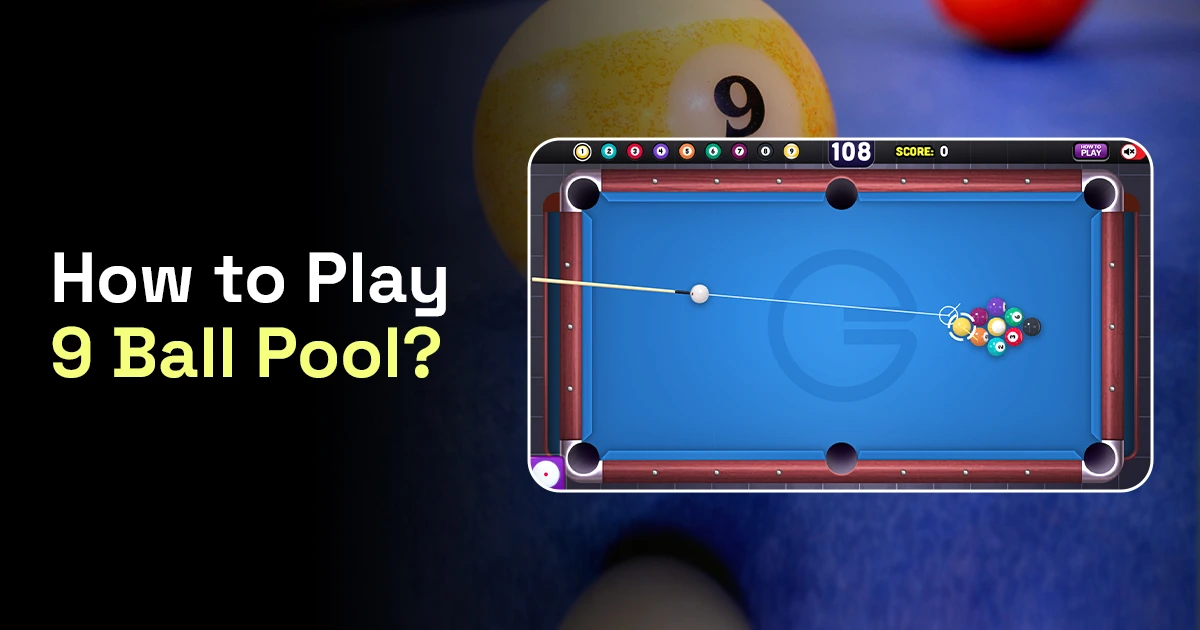
Playing 9 Ball Pool is simple to learn but offers a lot of depth for players who want to improve their skills. Whether you’re playing casually or competing in an online match, here’s a breakdown of how to play the game.
Step-by-Step Guide to Playing 9 Ball Pool
1. Setting Up the Game:
- The 9 balls are racked in a diamond shape, with the 1-ball at the front of the rack and the 9-ball in the center. The other balls are placed randomly behind the 9-ball.
- The player who is breaking (the first to shoot) must strike the 1-ball first.
2. Taking Turns:
- Players alternate turns, each trying to pocket the 9-ball. However, they must hit the lowest numbered ball on the table first.
- If the player legally pockets a ball, they continue their turn and must again hit the lowest numbered ball.
3. Hitting the Ball:
- The player’s goal is to hit the lowest numbered ball on the table, and if they make a legal shot, they get to keep playing.
- A legal shot is one where the player strikes the lowest numbered ball first, and either a ball is pocketed or the cue ball hits a cushion.
4. Winning the Game:
- The game is won when a player legally pockets the 9-ball. However, they can only pocket the 9-ball after hitting the lowest numbered ball first.
- The 9-ball doesn’t have to be the last ball to be hit – it just needs to be legally pocketed once the sequence has been followed.
5. Fouls:
- If a player commits a foul, the opponent gets ball-in-hand, meaning they can place the cue ball anywhere on the table.
- Common fouls include:
- Pocketing the cue ball (scratch).
- Failing to hit the lowest numbered ball first.
- Not hitting any balls at all.
6. Basic Strategies:
- Positioning: Always think about your next shot. 9 Ball Pool rewards players who plan ahead and set up shots rather than just pocketing balls randomly.
- Safety Play: Sometimes it’s better to play safe, positioning the cue ball in a way that makes it difficult for your opponent to make a shot.
- Bank Shots & Combinations: Players often use bank shots (bouncing the cue ball off a rail) or combination shots (hitting one ball into another) to pocket difficult balls or create opportunities for the 9-ball.
Tips for Improving Your 9 Ball Pool Game
- Master the Break: A strong break can set you up for a successful game. Focus on hitting the 1-ball squarely on the break and controlling the cue ball’s position.
- Control the Cue Ball: Unlike 8 Ball Pool, 9 Ball Pool is more about positioning. Always think about where the cue ball will land after each shot.
- Practice Advanced Shots: As you get more comfortable, try adding spin to your shots to control the direction of the cue ball and make more precise plays.
8 Ball Pool vs 9 Ball Pool
8 Ball Pool and 9 Ball Pool are both popular pool games, but they offer distinctly different experiences for players. Whether you’re a casual player or a competitive enthusiast, understanding the differences between these two games can help you decide which one aligns better with your gaming style. Below, we’ll highlight the key differences between 8 Ball Pool and 9 Ball Pool, so you can better appreciate the unique qualities of each game.
| Feature | 8 Ball Pool | 9 Ball Pool |
| Objective | Pocket all balls of your designated group (either stripes or solids) and then pocket the 8-ball to win. | Pocket the 9-ball after hitting the lowest numbered ball first. |
| Number of Balls | 15 balls (7 solids, 7 stripes, and the 8-ball) | 9 balls (1-9) |
| Gameplay Style | Slower-paced, with more emphasis on grouping and pocketing balls in order. | Faster-paced, with an emphasis on precision and tactical play. |
| Shot Sequence | Players can pocket any ball from their group (either solids or stripes) before the 8-ball. | Players must hit the lowest numbered ball first and work up to the 9-ball. |
| Difficulty | Easier for beginners, as the rules are more straightforward. | More challenging due to the need for precise shot sequencing and strategy. |
| Game Duration | Matches can be longer due to the number of balls involved and the slower pacing. | Matches are quicker because there are fewer balls, making the game more dynamic. |
| Multiplayer Appeal | Great for casual play and social matches. | Popular for competitive play, often seen in professional tournaments. |
| Strategic Depth | Requires some strategy, but mainly involves pocketing balls from your group. | Requires higher levels of strategy, as players need to plan shots and position balls carefully. |
| Popularity | The most popular pool game worldwide, with widespread appeal. | Growing in popularity, especially among players seeking a more competitive experience. |
What Technologies Are Used in 9 Ball Pool Game Development
Creating a successful 9 Ball Pool game requires advanced technologies that ensure smooth gameplay, real-time multiplayer, and scalable performance. Here’s a breakdown of the key technologies used in developing a game like 9 Ball Pool.
1. Game Engines: Unity & Unreal Engine
- Unity: Most commonly used for mobile games, Unity provides cross-platform compatibility (iOS, Android) and a strong physics engine for realistic ball movement.
- Unreal Engine: Known for its superior graphics rendering, Unreal is ideal for games requiring high-quality visuals, though it’s often more suited for complex environments.
2. Physics Simulation
Realistic ball movement and collisions are crucial. Engines like Unity’s PhysX and Unreal’s Chaos Physics handle:
- Ball collisions
- Spin, friction, and bounce
These engines ensure that the game feels natural, mimicking real-world physics.
3. Multiplayer Functionality
For real-time online matches, technologies like Socket.IO and Photon Engine enable seamless communication between players, managing:
- Matchmaking
- Lobbies and real-time synchronization
WebRTC is also used for peer-to-peer communication in games requiring live chat.
4. Backend Technologies
A robust backend ensures smooth gameplay and data syncing:
- js: Efficient for handling multiple concurrent connections, ideal for multiplayer pool games.
- Redis: Used for fast data caching, improving performance (e.g., storing scores and rankings).
- AWS: Provides scalable hosting for game servers to ensure low latency and reliability.
5. Graphics and Cloud Integration
- 2D and 3D Assets: Pool games often use 2D views for simplicity but may incorporate 3D assets for more immersive experiences.
- Google Firebase and Cloud Firestore: Used for real-time syncing of player data and game progress across devices.
Step-by-Step 9 Ball Pool Game Development Process
Creating a high-quality 9 Ball Pool game involves several stages, from initial concept to final launch. Each step is crucial to ensure the game is engaging, well-optimized, and ready for a global audience. Here’s a breakdown of the game development process:
Step 1: Conceptualization & Planning
Every game starts with an idea. The first step in creating a 9 Ball Pool game is to:
- Define the core mechanics: Decide how the game will function, from the basic rules to the user interface (UI) and experience (UX).
- Set the goals: Are you focusing on casual gameplay, professional tournaments, or both? Consider whether the game will be played offline or include multiplayer features.
- Research the market: Analyze competitors, like Miniclip’s 9 Ball Pool, and identify features that could make your game stand out.
Step 2: Design & Prototyping
Once the concept is clear, it’s time to start designing the game:
- UI/UX Design: Create intuitive and engaging menus, buttons, and game screens. This includes designing the pool table layout, buttons for actions, and score displays.
- Prototyping: Develop an early version of the game with basic mechanics to test how the game feels. Prototypes are important to identify any potential issues with gameplay before moving forward.
Step 3: Game Development
Now, the real development work begins:
- Physics Engine Implementation: Integrate the chosen physics engine (e.g., Unity’s PhysX or Unreal’s Chaos Physics) to simulate realistic ball movements, collisions, and ball spin.
- Multiplayer Setup: Use Socket.IO or Photon Engine to implement multiplayer features like matchmaking, lobbies, and real-time game synchronization.
- Core Gameplay Mechanics: Develop the main gameplay loop, where players take turns hitting balls, aiming for the 9-ball, and following the sequence of shots.
Step 4: Testing & Quality Assurance (QA)
Once the game mechanics are in place, it’s time to thoroughly test the game:
- Bug Testing: Identify and fix bugs in the gameplay, UI, and networking. Ensure the physics engine works as expected.
- Balancing: Fine-tune game difficulty, AI behavior, and multiplayer matchmaking to ensure a fair, competitive experience.
- User Feedback: Collect feedback from beta testers to refine the user experience (UX) and fix any remaining issues.
Step 5: Launch & Marketing
Once the game is polished and bug-free, it’s time to launch:
- App Store/Play Store Deployment: Submit the game to the appropriate platforms (e.g., Apple App Store, Google Play Store) for approval and release.
- Marketing Campaign: Use social media, influencer partnerships, and app store optimization (ASO) techniques to promote the game and attract players.
- Launch Events: Consider hosting in-game events, such as tournaments or promotions, to generate excitement during the launch phase.
Step 6: Post-Launch Support & Updates
The work doesn’t stop after launch:
- Monitor Server Performance: Ensure the servers handle player load, especially for multiplayer games.
- Frequent Updates: Release regular updates to introduce new features, fix bugs, and keep the community engaged. Seasonal events, new cues, or special challenges are a good way to keep players coming back.
- Community Engagement: Keep the player base active by interacting with players on social media, implementing their feedback, and keeping the gameplay fresh.
Key Features of a Successful 9 Ball Pool Game
To create a successful 9 Ball Pool game, there are several key features that enhance gameplay, player engagement, and monetization.
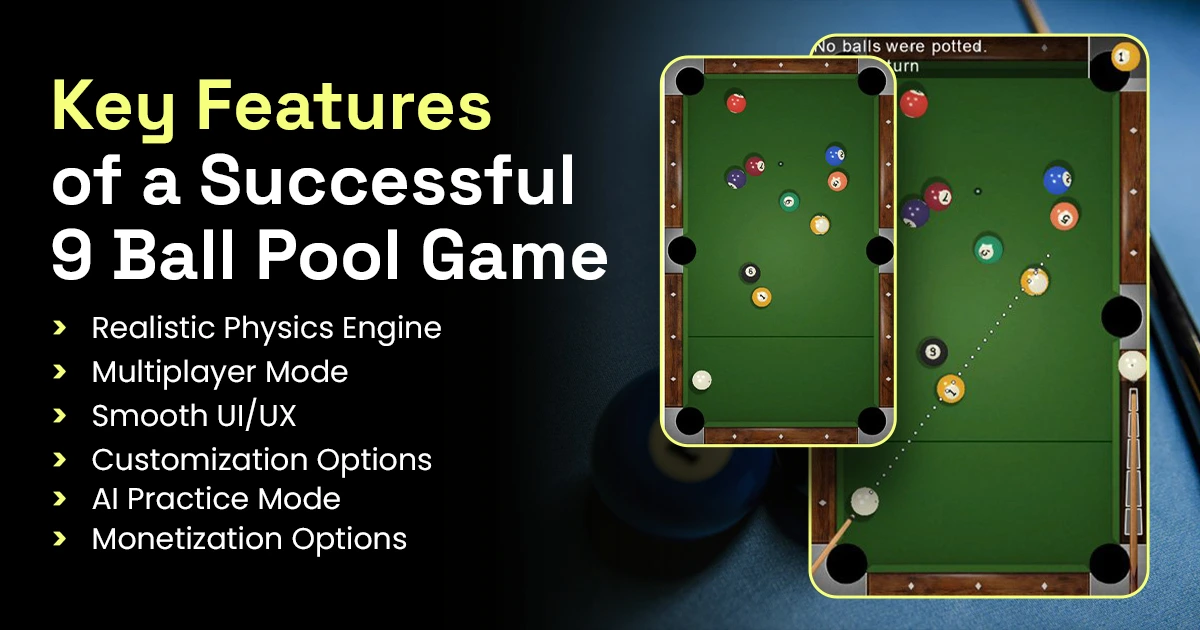
1. Realistic Physics Engine
The game must feature realistic ball movement and collision physics. This is crucial for creating an immersive experience and ensuring that shots feel natural, using engines like Unity’s PhysX or Unreal’s Chaos Physics.
2. Multiplayer Mode
Real-time multiplayer is essential. Features should include:
- Matchmaking: Pair players of similar skill levels.
- Leaderboards: Display rankings to keep the competitive spirit alive.
- Private Rooms: Let players create custom matches.
3. Smooth UI/UX
A simple, intuitive design makes the game accessible. Easy-to-use menus, clear instructions, and responsive controls help maintain a smooth user experience, particularly for new players.
4. Customization Options
Players love to personalize their experience. Offering:
- Cue and table skins
- Custom avatars
- In-app purchases for cosmetics
Customization options enhance player satisfaction and increase engagement.
5. AI Practice Mode
For newcomers, an AI practice mode and tutorials are essential to help players learn the rules and improve their skills before diving into real-time multiplayer matches.
6. Monetization Options
To generate revenue, consider:
- In-app purchases (skins, power-ups)
- Ads for bonuses
- VIP memberships for premium features
A mix of free-to-play and paid features helps monetize the game without frustrating players.
Top 9 Ball Pool Games
There are several well-known 9 Ball Pool games that have earned a large following and set the bar for what players expect from the genre. Here’s a look at some of the most popular ones:
1. Miniclip’s 9 Ball Pool
Miniclip’s 9 Ball Pool is by far the most popular and widely played 9 Ball Pool game. With over 500 million downloads on mobile platforms, it’s the go-to game for casual and competitive players alike. What sets it apart is its:
- Real-time multiplayer mode that allows players to compete globally.
- Customization options, such as different cues and tables.
- Frequent updates and events, keeping the game fresh for players.
2. Pool Live Tour
This is another strong competitor in the world of 9 Ball Pool games. Pool Live Tour offers a more socially connected experience, with the ability to:
- Compete in real-time matches.
- Join tournaments and leagues.
- Level up through skill-based progression.
While not as large as Miniclip’s 9 Ball Pool, it’s still popular for its social aspect and competitive tournaments.
3. Billiards City
Billiards City offers a classic pool experience, with 9 Ball Pool as one of its core modes. It’s known for its:
- Smooth physics engine and realistic ball movement.
- Challenging AI for players who want to practice offline before jumping into multiplayer matches.
- Clean interface and easy-to-understand gameplay, making it perfect for beginners.
4. 8 Ball Pool by Games Cafe
Although primarily focused on 8 Ball, Games Cafe’s version includes 9 Ball Pool as one of the modes. Players can enjoy:
- Competitive online play.
- Regular in-game events and rewards.
- Variety of pool modes, including 9 Ball, to keep the experience diverse.
5. Pro Pool 2022
While a newer addition to the pool game world, Pro Pool 2022 has received praise for its realistic graphics and solid gameplay. It features:
- Multiplayer tournaments with prizes.
- Online play against real opponents.
- Customizable cues and tables for a personalized experience.
Monetization Strategies in 9 Ball Pool Game
Monetizing a 9 Ball Pool game can be a great way to generate revenue while keeping the game fun and engaging for players. The key is to strike a balance between offering a free-to-play experience and providing value through in-app purchases or ads. Here are some of the most common monetization strategies used in pool games:
1. In-App Purchases (IAP)
- Cosmetics: Selling skins for cues, tables, or even the player avatar is one of the most popular ways to monetize. These items don’t affect gameplay but allow players to customize their experience.
- Power-ups: Some pool games offer boosts, such as increasing a player’s shot accuracy or giving them a chance for a lucky shot. These items can enhance gameplay without breaking the balance.
- Special Events & Tournaments: Offering exclusive access to tournaments or in-game events for a fee encourages competitive players to spend money to access premium content.
2. Ads
- Interstitial Ads: Displaying full-screen ads between matches or when transitioning between menus can generate significant revenue. This can be effective if the ads aren’t too intrusive.
- Rewarded Video Ads: Allow players to watch video ads in exchange for in-game rewards like coins, boosts, or extra lives. This strategy is great because it provides players with a reward and can be used to monetize non-paying users without negatively affecting gameplay.
- Banner Ads: Smaller, non-intrusive banner ads at the bottom of the screen can also bring in steady revenue without disrupting gameplay.
3. VIP Memberships & Subscriptions
- Subscription Models: Offering premium memberships or subscriptions that give players access to exclusive features, such as:
- Ad-free gameplay
- Access to special cues and tables
- Exclusive tournaments
- Faster progression or special rewards
This is a great option for players who want a premium experience and are willing to pay for it.
4. In-Game Currency
- Virtual Currency: Using a system like coins or tokens that players can buy or earn through gameplay offers another way to monetize. This currency can be spent on:
- Power-ups
- Cosmetic items
- Entry fees for premium tournaments
Virtual currency keeps the game free-to-play while providing players the option to speed up progression or access exclusive content.
5. Sponsorships & Partnerships
- Brand Collaborations: Partnering with brands or other games to create branded events, cues, or tables can be a lucrative revenue stream. These partnerships allow you to attract new players and offer exclusive content.
How Much Does It Cost to Develop a 9 Ball Pool Game?

The cost of developing a 9 Ball Pool game depends on several factors, including the game’s complexity, platform, team size, and features. While pool games may appear simple at first glance, they require intricate physics simulations, multiplayer infrastructure, and engaging user experiences to stand out in the competitive gaming market.
Below is a realistic breakdown of 9 Ball Pool game development costs based on complexity:
1. Basic 9 Ball Pool Game (MVP)
Estimated Cost: $20,000 – $50,000
What’s included:
- Core 9 Ball Pool gameplay mechanics
- Basic ball physics and collision detection
- Single-player mode or limited multiplayer functionality
- Simple UI and player customization options
- Basic scoring system and progression
- Minimal customization (basic cues, tables)
2. Mid-Level 9 Ball Pool Game (Production-Ready)
Estimated Cost: $50,000 – $150,000
What’s included:
- Realistic ball physics and advanced collision modeling
- Multiplayer functionality with matchmaking and lobbies
- Basic in-app purchases (cosmetic items like cues and tables)
- Integration with social media for sharing progress
- In-game ads or rewarded video ads for monetization
- Improved UI/UX design and visual effects
- Backend server support for player data, rankings, and statistics
3. Advanced 9 Ball Pool Game (Scalable with Live Ops)
Estimated Cost: $150,000 – $500,000+
What’s included:
- Full multiplayer support with dynamic matchmaking
- Advanced AI for offline play and single-player mode
- Cross-platform support (iOS, Android, Web)
- Real-time events and tournaments with live leaderboards
- Complex in-app purchases (VIP memberships, premium cues, power-ups)
- Advanced graphics with 3D ball animations and real-time lighting
- Robust backend infrastructure for scaling and handling millions of users
- Anti-cheat and anti-hack systems for fair gameplay
- Post-launch updates, live events, and continuous content additions
How Much Time Does It Take to Develop a 9 Ball Pool Game?
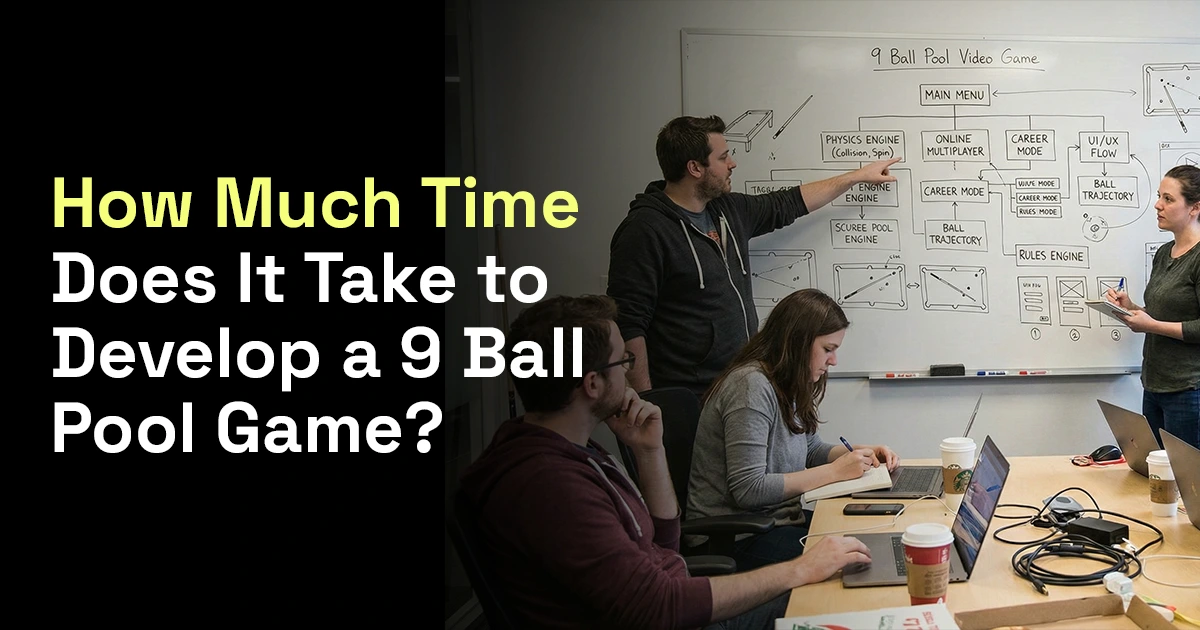
The time required to develop a 9 Ball Pool game varies based on factors such as the game’s complexity, the size of the development team, and the platform(s) being targeted. Below is a breakdown of how long it might take to develop a 8 Ball Pool game depending on its scope.
1. Basic 9 Ball Pool Game (MVP)
Estimated Development Time: 2 to 4 months
What’s included:
- Core gameplay and mechanics development
- Basic ball physics and collision detection
- Single-player mode or limited multiplayer functionality
- Simple UI design and basic player features
Time Factors:
- Small team (1–3 developers)
- Limited features and basic graphics
- Testing for a small user base
2. Mid-Level 9 Ball Pool Game (Production-Ready)
Estimated Development Time: 4 to 8 months
What’s included:
- Advanced ball physics and multiplayer matchmaking
- Integration of social media sharing and basic in-app purchases
- Backend support for player data and rankings
- Improved UI/UX and visual effects
Time Factors:
- Larger team (4–6 developers, 1–2 designers)
- Increased focus on multiplayer and visual polish
- Testing for larger player bases and cross-platform optimization
3. Advanced 9 Ball Pool Game (Scalable with Live Ops)
Estimated Development Time: 8 to 12 months (or longer)
What’s included:
- Full multiplayer support with dynamic matchmaking
- Advanced AI, real-time tournaments, and live events
- Cross-platform support (iOS, Android, Web)
- Robust backend for scaling, anti-cheat, and live operations
Time Factors:
- Large team (6+ developers, designers, QA testers)
- Complex game systems, server infrastructure, and high-quality graphics
- Continuous updates and post-launch support
Why Capermint Is the Right Partner for 9 Ball Pool Game Development
Choosing the right development partner is key to creating a successful 9 Ball Pool game. Here’s why Capermint Technologies stands out:
1. Expertise in Game Development
With extensive experience in both mobile and multiplayer games, Capermint’s team excels in building engaging, high-quality games. We handle everything from gameplay mechanics to advanced multiplayer features and custom graphics.
2. Proven Track Record
We have a successful portfolio of game projects, demonstrating our ability to deliver fun, technically solid, and visually appealing games.
3. Full-Cycle Development
Capermint provides end-to-end services, including:
- Game design and prototyping
- UI/UX design
- Multiplayer integration
- QA testing
- Post-launch updates and maintenance
4. Tailored Solutions
We work closely with clients to create customized 9 Ball Pool games, ensuring that every element fits your vision, whether it’s gameplay or monetization.
5. Scalable Infrastructure
We build scalable, secure backend systems to handle large player bases, ensuring your game performs well as it grows.
6. Continuous Support
We offer ongoing support post-launch, including game updates, live events, and player feedback integration to keep the game fresh and engaging.
Conclusion
Developing a 9 Ball Pool game is an exciting and rewarding venture. With the right gameplay mechanics, technologies, and monetization strategies, you can create a game that captures players’ attention and keeps them engaged for the long term.
From realistic ball physics and multiplayer features to customization options and monetization, every aspect of game development plays a vital role in ensuring the success of your pool game. By understanding the development process, the costs, and the key features needed, you’ll be well-equipped to bring your 9 Ball Pool game to life.
At Capermint Technologies, we specialize in creating custom pool games that meet the needs of both players and businesses. Whether you’re building a casual mobile game or a competitive multiplayer experience, we offer end-to-end development services to ensure your game is successful.
Ready to start your 9 Ball Pool game development journey? Contact Capermint Technologies today to turn your idea into a reality!