Gamification refers to applying game-design elements (like points, badges, leaderboards, challenges, and rewards) in non-game contexts. It aims to boost engagement, productivity, training, and quality in manufacturing. Gamification involves creating a structured system where employees interact with tasks as they would in a game, gaining rewards and feedback based on performance.
Why Gamification?
In an industry like manufacturing, where processes can be repetitive and physically demanding, maintaining high levels of engagement can be difficult. Gamification helps alleviate these issues by making tasks more interactive and enjoyable. By introducing game-like mechanics, employees feel more motivated, leading to improved performance, increased retention, and enhanced skill development.
For example, manufacturers like Toyota and Bosch have adopted gamification to motivate workers through reward-based systems that encourage higher output and fewer errors.
This article explores the growing role of gamification in manufacturing, its latest trends, practical use cases, and how it aligns with cutting-edge technologies like AI, IoT, and AR/VR. Let’s look into how gamification is driving measurable growth and innovation in the manufacturing sector.
Trends in Manufacturing Gamification(2025 Update)
As gamification evolves, it continues to shape the manufacturing industry with innovative technologies and strategies. In 2025, the integration of advanced tools such as AI, IoT, and blockchain has redefined how manufacturers engage employees, optimize processes, and achieve business goals. Below are the key trends shaping gamification in manufacturing this year:
Recent Developments:
- AI and Machine Learning Integration: Modern gamification platforms now utilize AI and machine learning to provide customized challenges and real-time feedback based on individual employee performance. For example, AI can detect potential bottlenecks in production and suggest personalized tasks or goals for employees to address these issues efficiently.
- AR/VR in Training Modules: Augmented Reality (AR) and Virtual Reality (VR) are transforming employee training by simulating complex manufacturing tasks in a risk-free environment. Companies like Siemens have embraced VR-based training modules, allowing workers to gain hands-on experience in assembling intricate machinery without real-world risks.
- Data-Driven Decision Making: With the rise of IoT-connected devices, gamified systems now analyze real-time data from machines and sensors. This enables managers to track progress, set dynamic goals, and ensure rewards are aligned with real-time performance metrics.
New Technologies in 2025:
- IoT-Enhanced Gamification: IoT is at the forefront of gamification in manufacturing. Connected devices on production lines provide real-time updates and instant feedback on employee tasks. For instance, IoT sensors track operational efficiency, rewarding workers for reducing error rates or completing tasks more quickly.
- Blockchain for Rewards Systems: Blockchain technology has introduced a secure and transparent method of managing employee rewards. Workers earn tokens or points for completing tasks, which can be redeemed for tangible benefits, ensuring fairness and trust in the reward system.
- AI for Personalized Feedback: AI-powered gamification systems keep employees engaged by delivering personalized feedback and creating challenges that match their skill levels. These platforms encourage continuous learning and improvement, ensuring long-term productivity.
Key Benefits of Gamification in Manufacturing
1. Boosted Workforce Engagement
Gamification significantly enhances employee involvement by introducing goal-oriented systems like points and badges. A 2023 Deloitte study revealed that manufacturers implementing gamified systems experienced a 30% increase in workforce engagement.
2. Enhanced Training and Skill Development
Gamification simplifies training for complex machinery and processes through interactive simulations. BMW, for example, uses AR-based training tools that improve employee skill retention by 25% compared to traditional methods.
3. Improved Efficiency and Productivity
By encouraging friendly competition, gamified systems motivate employees to excel. Predictive maintenance systems, such as the one trialed by General Electric (GE), leverage gamification to reduce downtime by 20%.
4. Increased Employee Retention and Satisfaction
Recognizing achievements through gamification fosters a sense of accomplishment and job satisfaction, reducing turnover. A McKinsey survey from 2024 highlighted a 15% drop in employee turnover among manufacturing firms using gamified practices.
Gamification Use Cases in Manufacturing
Gamification is transforming the manufacturing industry by enhancing processes, motivating employees, and boosting operational efficiency. Below are some practical use cases illustrating its impact:
-
Production Floor Optimization
Gamification plays a crucial role in improving efficiency on the production floor by introducing reward systems tied to task completion and problem-solving. For example, Toyota implemented gamified dashboards to encourage employees to identify and resolve issues in real time. This approach reduced assembly line errors by 12%, demonstrating the effectiveness of gamification in streamlining daily operations.
-
Training and Onboarding
Integrating gamified elements into training and onboarding processes helps new employees quickly adapt to their roles. Ford utilizes VR-based gamification to train assembly line workers, enabling them to participate in interactive, game-like scenarios that replicate real-world tasks. As a result, the onboarding process is accelerated, reducing the time needed to prepare new hires by 40%.
-
Quality Control and Safety
Gamification enhances quality control by rewarding employees for consistently adhering to production standards. Boeing has introduced a system that assigns points to workers who detect and resolve production flaws. This approach has improved quality adherence by 18% over one year. In addition, gamified safety training reinforces proper procedures, ensuring employees remain vigilant and proactive in maintaining workplace safety.
-
Maintenance and Operations
Predictive maintenance is more effective when gamified. Siemens employs a gamified system where workers are incentivized to report potential equipment issues early. This proactive approach has led to a 15% reduction in machine breakdowns, improving overall equipment health and minimizing downtime.
Practical Use Cases for Gamification in Manufacturing
- Preventive Maintenance: Incentivizes workers to maintain equipment regularly.
- Friendly Competition: Boosts performance through healthy challenges.
- Employee Recognition: Fosters a culture of achievement and morale.
- Waste Reduction: Gamification encourages more efficient practices.
- Improved Productivity: Makes tasks more engaging, leading to better results.
Challenges in Implementing Gamification in Manufacturing
While gamification offers numerous advantages, its implementation in manufacturing comes with certain challenges. Addressing these obstacles is crucial for the success of gamified initiatives.
-
Cultural Resistance
Manufacturing environments, particularly those rooted in traditional practices, often face resistance to adopting gamification. Employees may perceive gamified systems as unnecessary or overly complicated, leading to low acceptance rates.
To mitigate this, companies must clearly communicate the benefits of gamification and provide hands-on training. Involving employees in the design and implementation process can also help foster a sense of ownership and acceptance.
-
Cost and Complexity
Implementing gamification platforms, especially those utilizing advanced technologies like AI, IoT, and AR/VR, can be expensive. For small and medium-sized enterprises (SMEs), these costs may be prohibitive. In 2024, the estimated cost of deploying a comprehensive gamification system for large-scale manufacturers ranged from $500,000 to $1 million.
Additionally, the integration process may require expertise and time, adding to the complexity. To address this, manufacturers can start with scalable solutions and gradually expand as they see results.
-
Data Privacy and Security
Gamification systems often collect and analyze large amounts of employee performance data, raising concerns about privacy and security. Ensuring compliance with regulations such as GDPR and CCPA is essential to protect worker information.
A 2023 survey revealed that 30% of manufacturers cited data privacy as a significant concern when adopting gamification platforms. Companies must invest in secure systems and transparent policies to build trust and ensure compliance with legal standards.
Gamification Tools and Platforms in Manufacturing (2025)
As gamification gains momentum in the manufacturing sector, several platforms and tools have emerged to meet the industry’s unique needs. These platforms offer solutions for training, productivity, and engagement, leveraging modern technologies to drive measurable improvements.
Popular Gamification Platforms:
- Gameffective: Gameffective focuses on personalized learning and performance feedback tailored to manufacturing workers. The platform improves productivity through task-based challenges and progress tracking, ensuring continuous development.
- Axonify: Axonify specializes in gamified learning solutions for industrial training. It provides micro-learning modules designed for quick, effective skill-building among manufacturing employees.
- Zynga for Business: Leveraging its gaming expertise, Zynga has introduced platforms aimed at gamifying workforce training and operational tasks in industrial environments, enhancing motivation and efficiency.
Capermint Technologies: A Leader in Customized Gamification Solutions
Capermint Technologies has emerged as a premier provider of customized gamification services, specifically designed for the manufacturing sector. By combining state-of-the-art technology with deep industry insights, Capermint creates bespoke gamified systems that optimize manufacturing processes and elevate workforce performance.
- Custom Solutions: Unlike generic platforms, Capermint designs gamified strategies based on the specific challenges and goals of each manufacturer. Whether it’s integrating with ERP, MES, or other specialized tools, their solutions ensure a seamless fit with existing systems.
- Advanced Features: Capermint’s platforms include cutting-edge features such as:
- AI-driven analytics: Real-time performance tracking and insights.
- AR/VR training modules: Immersive simulations for risk-free skill-building.
- Blockchain-based reward systems: Transparent, secure reward distribution for fostering trust and engagement.
- Proven Impact: Partnering with Capermint has led manufacturers to experience remarkable improvements in critical metrics, including enhanced productivity, reduced downtime, and improved quality assurance. The ease of use and ROI delivered by their gamification solutions make them the preferred choice for innovative manufacturing businesses.
Customization and Flexibility
Modern gamification platforms prioritize customization, allowing manufacturers to align gamified solutions with their unique workflows. For example, Caterpillar successfully integrated gamification into their ERP systems to streamline productivity tracking and goal setting. Capermint Technologies excels in offering highly personalized gamification strategies, ensuring that each solution aligns with the manufacturer’s specific processes and objectives.
Gamification and Industry 4.0
Synergies between Gamification and Industry 4.0: Gamification aligns closely with Industry 4.0, which involves the automation of manufacturing technologies using smart devices and real-time data. In this context, gamified systems motivate workers to interact with these technologies more efficiently, leading to optimized production.
Digital Twins and Gamification: Digital twins—virtual replicas of physical assets—are increasingly being used in gamification. By simulating production environments, workers can engage in problem-solving scenarios and predictive maintenance. Rolls Royce uses gamified digital twins to teach workers how to optimize engine performance.
ROI and Impact Measurement
KPIs to Track Gamification Success:
- Increased Productivity: Measuring output per worker before and after gamification implementation.
- Error Reduction: Tracking the number of errors or defects in production.
- Employee Engagement: Monitoring participation rates in gamified systems.
- Training Efficiency: Tracking how long it takes to train new employees and whether they retain the skills longer.
Case Studies and Success Metrics:
- Bosch: Introduced gamification in 2022 to its factories, leading to a 25% rise in task completion rates and a 15% reduction in machine downtime within one year.
- GE: Implemented gamified predictive maintenance systems and observed a 20% productivity increase, saving millions of dollars through decreased downtime and greater operational efficiency.
Quantifying the ROI of Gamification:
Manufacturers investing in gamification often experience significant returns, including enhanced workforce efficiency and better resource utilization. Gamification systems not only improve employee engagement but also contribute to tangible cost savings, making them a valuable component of Industry 4.0 strategies.
How to Include Gamification in Manufacturing
Integrating gamification into manufacturing processes requires a strategic approach that aligns with business objectives and workforce needs.
Here’s a step-by-step guide to effectively implement gamification in your manufacturing setup:
1. Identify Key Objectives and Challenges
Before introducing gamification, outline the specific goals you want to achieve. These may include improving productivity, enhancing safety compliance, reducing downtime, or streamlining onboarding. By pinpointing your challenges, you can design a gamified system that addresses them effectively.
2. Choose the Right Gamification Tools and Platforms
Select gamification platforms tailored to your needs, such as:
- Axonify for training and onboarding.
- Gameffective for performance management.
- Capermint Technologies for custom gamification solutions integrated with ERP, MES, or other systems.
These tools should provide real-time tracking, personalized feedback, and seamless integration with existing workflows.
3. Design Engaging Gamified Processes
Craft gamified elements that resonate with employees, such as:
- Points and Rewards: Reward employees for achieving goals like reducing errors or improving throughput.
- Leaderboards: Foster friendly competition among workers to boost engagement.
- Achievements and Badges: Recognize milestones such as completing training modules or adhering to safety protocols.
4. Focus on Training and Development
Use gamification to make training interactive and effective. Implement VR or AR simulations for hands-on experience in areas like machine operation or safety drills. By transforming mundane training sessions into engaging challenges, employees absorb knowledge faster and retain it longer.
5. Monitor Progress with Real-Time Feedback
Provide employees with real-time updates on their performance through gamified dashboards. Set clear metrics and goals, allowing them to see their progress and areas for improvement. Managers can use this data to adjust tasks and reward employees fairly.
6. Promote a Culture of Recognition
Incorporate gamification as part of a broader effort to recognize employee contributions. Enable peer-to-peer recognition and reward consistent performers to create a positive and motivated work environment.
7. Start Small and Scale Gradually
Begin with a pilot program to test the effectiveness of gamification in specific areas, such as quality control or equipment maintenance. Gather feedback, refine the system, and scale it to other processes once proven successful.
8. Ensure Data Privacy and Compliance
When implementing gamification, prioritize data privacy by adhering to regulations like GDPR or CCPA. Safeguard employee data and ensure transparency in how it’s collected and used.
9. Regularly Update Gamified Systems
To keep employees engaged, update gamified elements regularly. Introduce new challenges, goals, and rewards based on evolving business needs and employee feedback.
The Future of Gamification in Manufacturing
As manufacturing evolves, gamification continues to play a pivotal role in shaping efficient, innovative, and employee-friendly work environments.
Here’s a glimpse into what lies ahead:
1. Autonomous Systems
The rise of autonomous robots and smart factories demands seamless human-machine collaboration. Gamification is being leveraged to train employees in managing these systems effectively. For example, gamified modules teach operators how to oversee robotic assembly lines, ensuring smooth interactions and minimal disruptions.
2. Advanced Predictive Analytics
With AI and machine learning powering predictive analytics, gamification systems can forecast performance gaps and recommend targeted improvements. Employees can receive personalized challenges aimed at enhancing specific skills or addressing areas of underperformance.
3. Workplace Transformation
The future of manufacturing workplaces will emphasize continuous learning and skill development. Gamification will underpin long-term career development programs, encouraging employees to acquire new competencies over time. Gamified platforms may provide progression paths, where employees unlock badges and rewards for mastering advanced technologies or leadership roles.
4. Sustainability and Gamification
As sustainability becomes a core focus, gamification will incentivize eco-friendly practices. Manufacturers will reward employees for reducing waste, conserving energy, or meeting sustainability targets. For instance, Unilever uses gamified systems to track and reward workers for adhering to waste-reduction goals, significantly improving its environmental impact.
For more details, read our extended detailed article Emerging Trends in Gamification.
Why Capermint Technologies is the Best for Gamification in Manufacturing
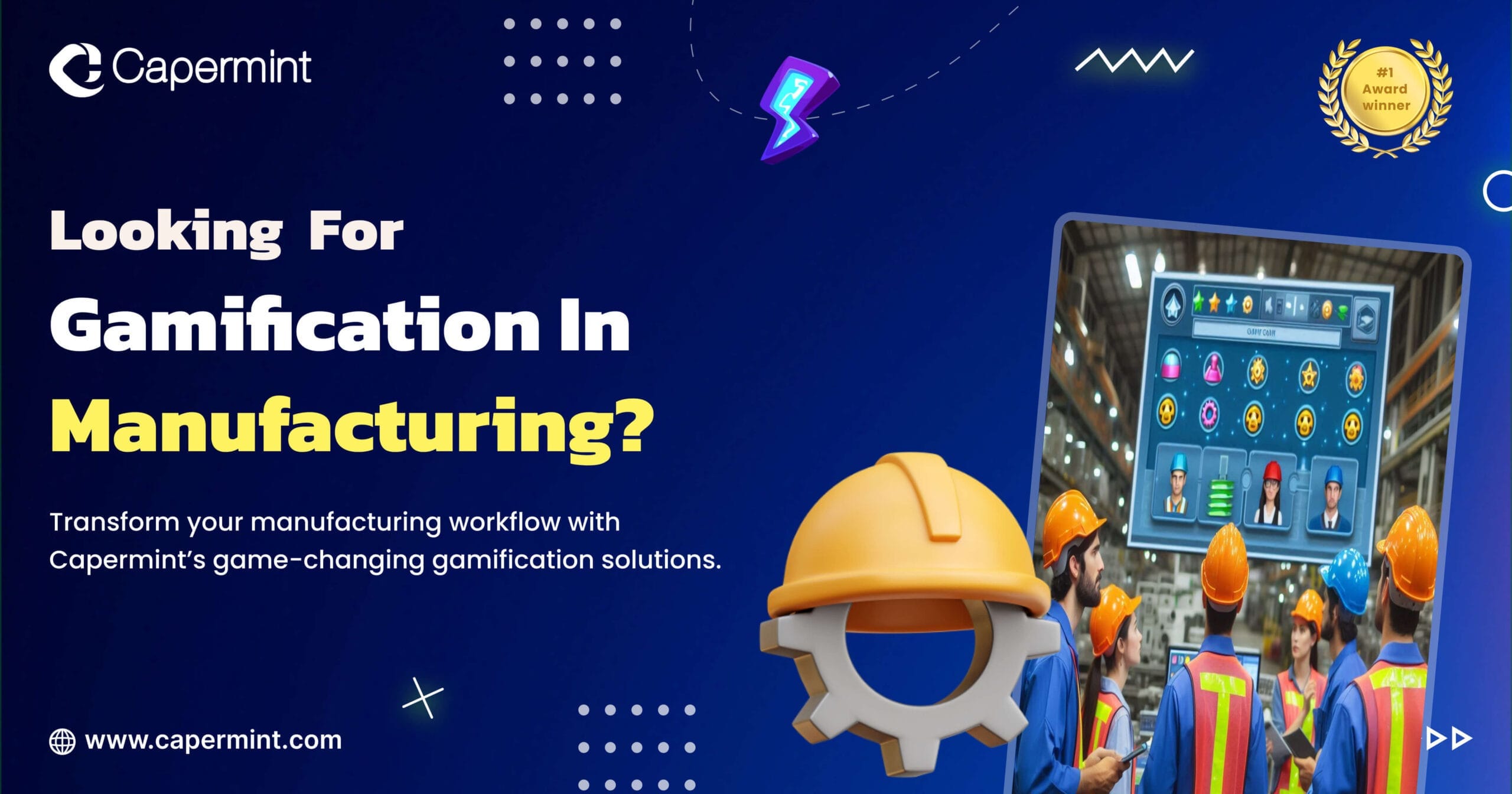
Capermint Technologies has established itself as a leading provider of gamification solutions tailored specifically for the manufacturing industry. Their innovative approach combines technological excellence with a deep understanding of manufacturing challenges, making them the ideal partner for businesses looking to integrate gamification into their operations.
Tailored Solutions
Capermint specializes in delivering fully customized gamification strategies that seamlessly integrate with existing systems like ERP, MES, and other industry-specific tools. These solutions are designed to boost productivity, improve employee engagement, and align with the unique workflows of each client, ensuring minimal disruption and maximum impact.
Advanced Technology
Capermint leverages cutting-edge technologies such as AI, AR/VR, IoT, and blockchain to create immersive and efficient gamification platforms. From advanced training modules powered by AR/VR to IoT-enabled real-time feedback systems, their solutions focus on improving operational safety, efficiency, and workforce development.
Proven Success
Capermint boasts a strong track record of delivering measurable results to its clients. Manufacturers who have partnered with Capermint have reported substantial gains in productivity, reduced downtime, and improved employee satisfaction. Their ability to deliver quantifiable benefits sets them apart as a trusted leader in gamification.
Scalability and Support
Whether you’re a small manufacturing unit or a large enterprise, Capermint’s gamification solutions are designed to scale with your needs. They also provide comprehensive support, including onboarding, employee training, and system updates, ensuring a smooth transition and long-term success.
Innovation
Capermint is dedicated to staying ahead of the curve by continuously evolving its offerings. By incorporating the latest advancements in gamification and technology, they ensure that their clients always benefit from the most innovative and effective solutions available.
Conclusion
Gamification is transforming the manufacturing industry by boosting productivity and making work more engaging for employees. As technology continues to evolve, the role of gamification is becoming more essential in helping factories stay modern and efficient.
Capermint Technologies leads the way in this field by offering customized solutions that fit seamlessly into existing business operations. Their expertise ensures that any investment in gamification pays off, leading to significant improvements in both efficiency and employee satisfaction.
By choosing Capermint as a partner, manufacturers can expect robust support and a clear growth path, positioning themselves at the forefront of industry innovation.