In the diverse world of gaming, two distinct types dominate the scene: skill-based games and luck-based games. Each offers a unique experience, appealing to different types of players and skill sets. While skill-based games rely predominantly on a player’s ability and strategy, luck-based games leave much of the outcome to chance. This article delves into the nuances of these two gaming paradigms, offering a comparative view to help enthusiasts understand where they might find their niche.
Skill-Based Games: A Test of Mastery
 Skill-based games are those where the outcome is primarily determined by a player’s physical or mental skill rather than chance. Examples include strategic board games like chess, where foresight and planning play pivotal roles, and eSports like ‘League of Legends,’ where quick reflexes and team strategy are key. Even some card games like Poker, though involving an element of chance, are considered skill-based due to the significant role of strategy and psychology.
- The Appeal of Mastery: These games attract players who relish the challenge of honing their skills. The sense of progress and mastery is a powerful motivator, often leading to a more profound, sustained engagement with the game.
- Learning Curve: Skill games typically have a steeper learning curve. New players might find it challenging to compete against seasoned players, which can be both a barrier and a motivation to improve.
- Impact on Brain Development: Research suggests that skill-based games can positively impact cognitive skills like problem-solving, memory, and spatial awareness.
Skill Gaming Key Characteristics
The defining feature of skill-based games is the reliance on the player’s abilities. These games often require practice, learning, and continual improvement. They reward strategic thinking, quick decision-making, and in some cases, physical dexterity.
Skill Gaming Advantages
Skill-based games offer a sense of progression and mastery. Players can see tangible improvements in their performance over time. This skill development can be deeply satisfying and forms the basis of fair competition, where players compete on an even playing field defined by ability.
Skill Gaming Challenges
The main challenge of skill-based games is the higher entry barrier for new players. Mastery requires time and effort, which can be daunting for beginners. Moreover, the competitive nature of these games can sometimes create a high-pressure environment.
Examples of Skill-Based Games
- Board Games: Chess, Go, Scrabble, where strategic thinking and skill are essential.
- Sports: Basketball, Soccer, Tennis, Golf, where physical skills and tactical knowledge are key.
- Video Games: StarCraft, Counter-Strike, Chess.com, where strategic planning, quick reaction times, and hand-eye coordination are crucial.
- Puzzles: Rubik’s Cube, Sudoku, and Crossword puzzles, which require problem-solving skills.
- Card Games: Bridge, Poker (to an extent), Magic: The Gathering, where strategic planning and probability assessment are important
Why Skill-Based Games?
- Cognitive Development: Improve problem-solving, memory, strategic planning, and analytical skills.
- Sense of Mastery: The journey towards mastering these games provides a sense of achievement.
- Long-term Engagement: Continuous skill improvement keeps players engaged over time.
Luck-Based Games: The Thrill of Chance
 Luck-based games are those where chance predominates over skill in determining the outcome. Classic examples include roulette and slot machines in casinos and lottery games where the draw is entirely random. These games are governed by probability and luck, with little to no influence from player strategy.
- The Allure of Uncertainty: The unpredictability associated with these games can be exhilarating. The thrill of winning against the odds can be extremely satisfying, making these games highly appealing to many.
- Accessibility and Inclusivity: Luck-based games are generally more accessible as they require less prior skill or knowledge. This inclusivity allows players of all skill levels to participate and enjoy.
- Risk and Reward: These games often involve an element of gambling, which can be both an attraction and a pitfall. The psychological aspects of risk and the potential for addiction are important considerations.
Luck-Based Gaming Key Characteristics
The hallmark of luck-based games is their unpredictability and the minimal role of skill. The thrill of these games often lies in the suspense and excitement of the unknown outcome.
Luck-Based Gaming Advantages
These games are highly accessible and easy to engage with, requiring no prior skill or knowledge. They provide instant gratification and are ideal for casual entertainment. The simplicity and the chance of winning big with a small stake make them appealing to a broad audience.
Luck-Based Gaming Challenges
The reliance on luck means players have limited control over the outcome. This can lead to frustration and the misconception that patterns or ‘winning strategies’ exist in what are essentially random outcomes. Additionally, the ease of play and the allure of big wins can foster gambling addiction.
Examples of Luck-Based Games
- Casino Games: Roulette, Slots, Bingo, where outcomes are based on random chance.
- Lottery Games: National and state lotteries, scratch cards.
- Board Games: Candy Land, Chutes and Ladders, The Game of Life, where progress is determined by random dice rolls or card draws.
- Card Games: War, Baccarat, and many forms of Raffles.
- Online Games: Many mobile and online games rely on random number generators for progress.
Why Luck-Based Games?
- Accessibility: Require little to no prior skill, making them inclusive.
- Excitement of Uncertainty: The unpredictability of these games can be thrilling.
- Social Interaction: Often facilitates social interactions in a non-competitive atmosphere.
Luck-Based Games B2B Investment Rationale
- Wide Audience Reach: Accessible to a broad demographic, increasing potential market size.
- Rapid Monetization: Through in-app purchases, advertising, and microtransactions.
- High User Acquisition: Lower barriers to entry help in quickly building a large user base.
- Social Gaming Opportunities: Potential for social platform integrations, enhancing user engagement.
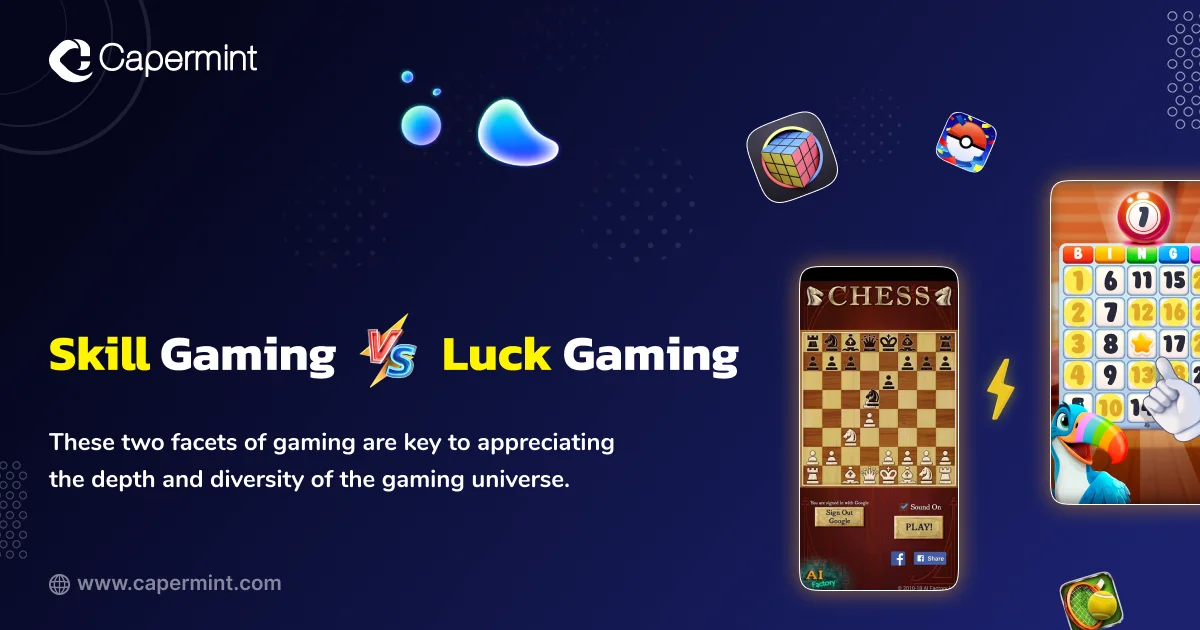
Skill VS Luck Based Games Comparison
| Aspect | Skill-Based Games | Luck-Based Games |
|---|---|---|
| Skill Level Required | High, as outcomes depend on the player’s ability and strategy | Minimal, as outcomes are largely determined by chance |
| Degree of Luck | Low, though some games may involve elements of chance | High, as chance is the primary determinant of outcomes |
| Potential Earnings | Can be substantial, especially in professional settings like eSports or competitive Poker | Often capped by game design, but can offer large payouts in games like lotteries or casino jackpots |
| Learning Curve | Steep, requiring dedication to master the skills | Easy, with no prior knowledge or skill required |
| Accessibility | May require substantial investment in learning and practice | Easy to start, appealing to a casual audience |
| Risk Factors | Risk of over-investment in time and effort, potentially high pressure in competitive scenarios | High risk of gambling addiction, financial loss |
| Key Appeal | Mastery and improvement | Excitement and unpredictability |
| Player Engagement | Long-term through skill improvement | Short-term thrill |
| Cognitive Benefits | Enhances cognitive skills like problem-solving | Minimal cognitive skill development |
| Examples | Chess, Basketball, StarCraft, Sudoku, Poker (partially) | Roulette, Bingo, Candy Land, Lottery, Slots |
Earning Money Through Skill-Based Games
Building Expertise
The first step is honing your skills in a specific game. This often involves extensive practice, studying strategies, and learning from other players.
Competitions and Tournaments
Many skill-based games have competitive scenes, from local tournaments to international eSports events. Success in these arenas can lead to substantial earnings.
Live Streaming and Content Creation
Platforms like Twitch and YouTube offer opportunities for skilled gamers to earn money by streaming their gameplay and providing game-related content.
Earning Money Through Luck-Based Games
1. Reality Check
It’s crucial to understand that while the potential for large payouts exists, the odds are generally stacked against the player in luck-based games.
2. Possible Avenues
- Lottery Wins: While offering the potential for life-changing sums, the odds of winning big are extremely slim.
- Casino Gambling: Games like slots and roulette can provide short-term winnings, but the house edge means the odds are not in favour of the player in the long run.
3. Cautionary Advice
Responsible gambling is key. It’s important to gamble only with money you can afford to lose and to be aware of the signs of gambling addiction.
Conclusion
In the gaming world, the choice between skill and luck is not just about preference but also about understanding your strengths, goals, and the risks involved. Whether you lean towards the strategic depth of skill-based games or the thrilling unpredictability of luck-based games, both offer unique and engaging experiences.